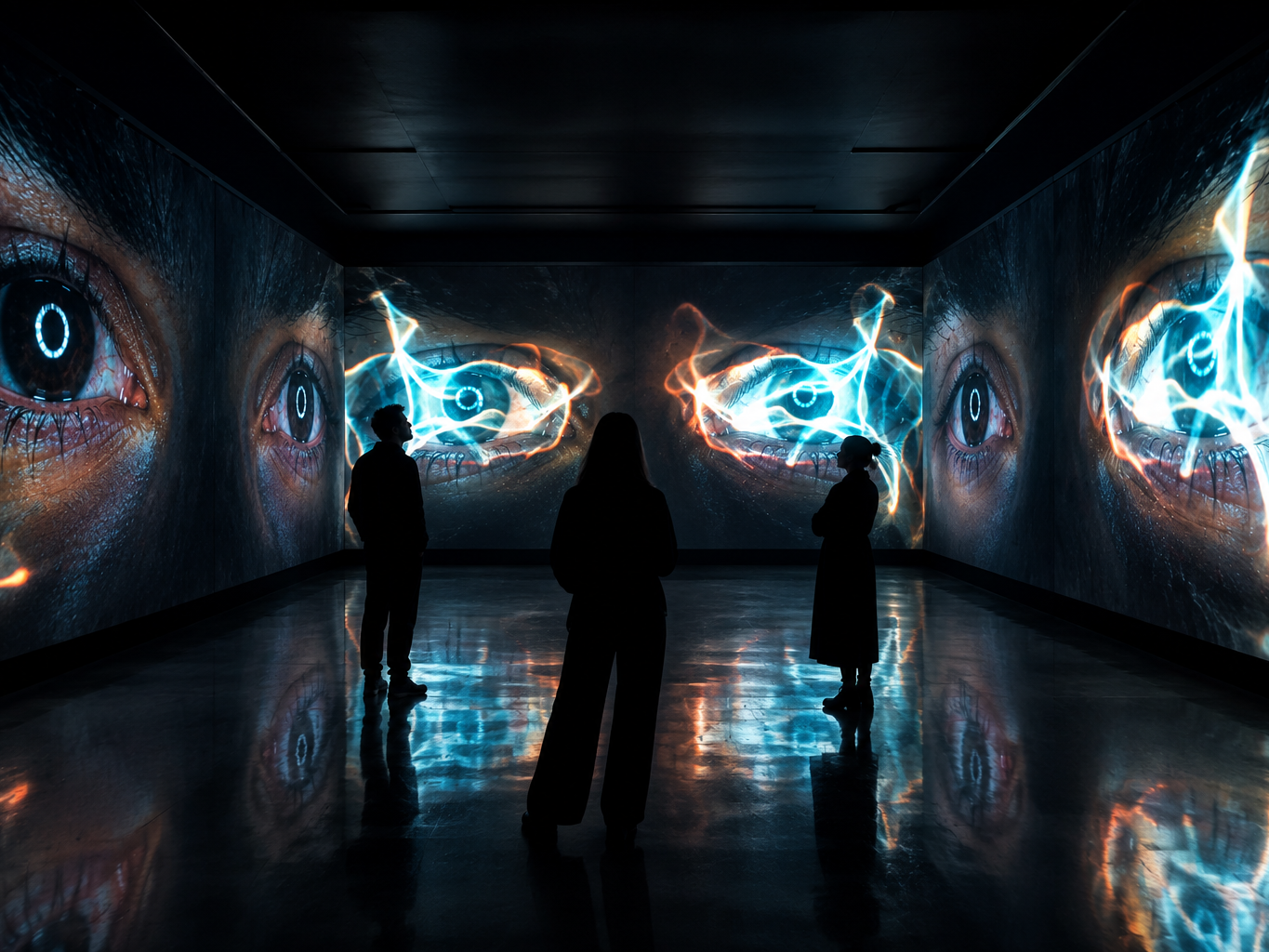
CONTEMPLATION
CONTEMPLATION is an artwork that contrasts two incarnations of life that, at first glance, seem absolutely different in terms of culture and ontology: a non-existing, organic plant world and highly enlarged, detailed pictures of the human body.
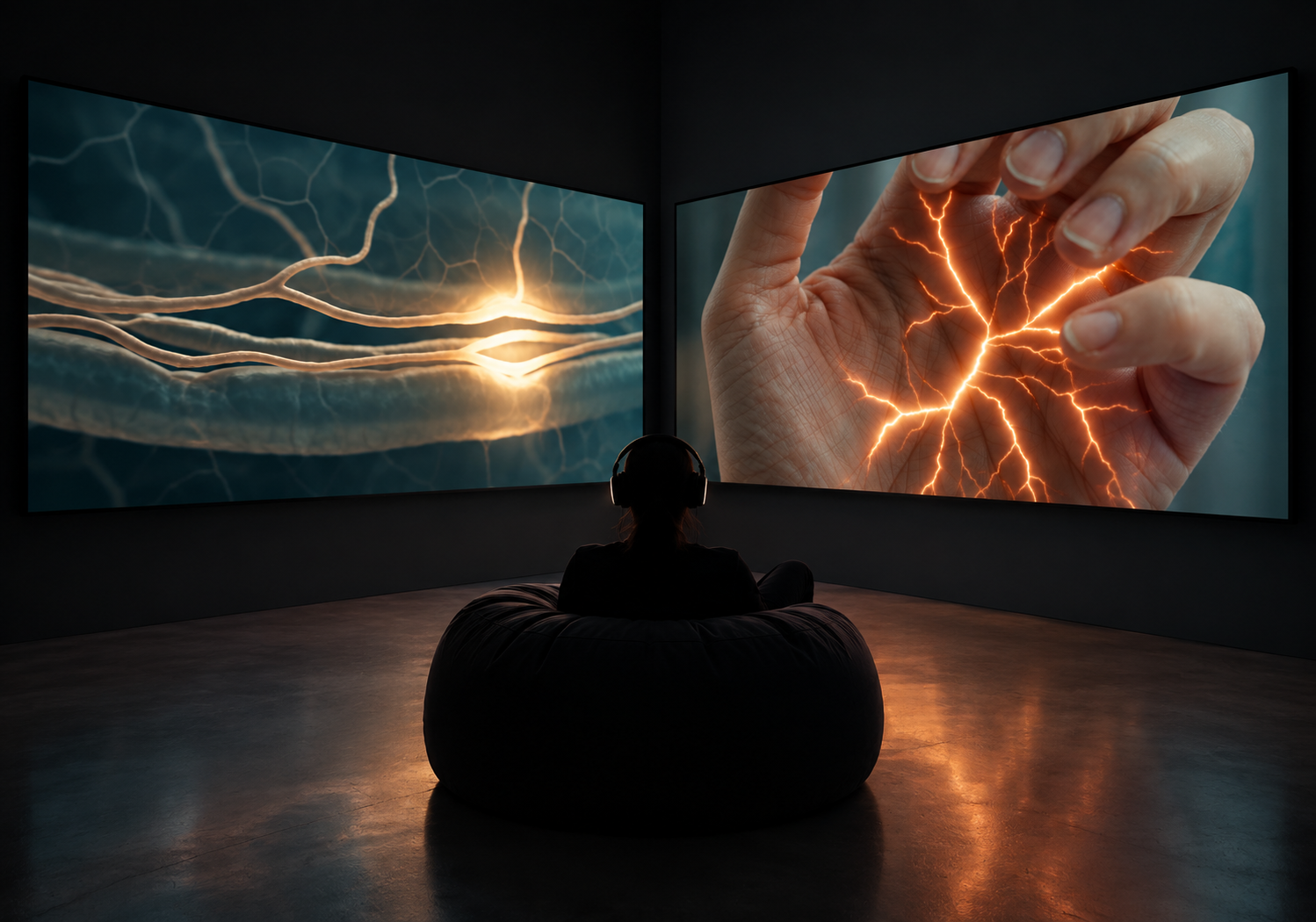
Two screens are placed perpendicular in an artificially created space. One screen shows plants that don't belong to any real biological taxa, yet these life forms are alive: they breathe, pulse, move, and act according to their intrinsic rhythms. Plants are alive organisms developing autonomously.
Another stream offers an extremely close look at the human body. Skin, hands, tissues, and light effects become the main components of the imagery. In this case, the body is not a portrait and the carrier of individuality, but another organismic system: living matter, operating, sensing, and radiating energy.
No conventional narrative relation connects the two flows of imagery. Relation is based on the concept of life itself. Pulsing, breathing, illumination, and continuous transformation of matter become the features visible on both screens as various incarnations of one basic process. Artificially created flora and the real human body begin to lose their specific character.
Light is one of the artwork's key elements. Not only as illumination, but as the writing of life: it appears inside the organism, goes through its tissue, then disappears and appears again. At some moments, images on the two screens become like reflections of each other, offering two different perspectives of the same living system.
The spectator, sitting on the beanbag between two screens, hears the soundtrack through the headphones. Therefore, the space is not just the place of the performance, but becomes an element of the artwork itself. The viewer becomes the third incarnation of being between two organic worlds: the observer, though the viewer's body becomes part of the whole process of life.
CONTEMPLATION doesn't ask questions about the essence of life, but asks about the borders between the alive and the artificial, between humans and plants, between nature and artificially created things. Ultimately, two flows of imagery become one statement: life doesn't have to be recognized only through form, but also through transformation, rhythms, pulsation, and light.