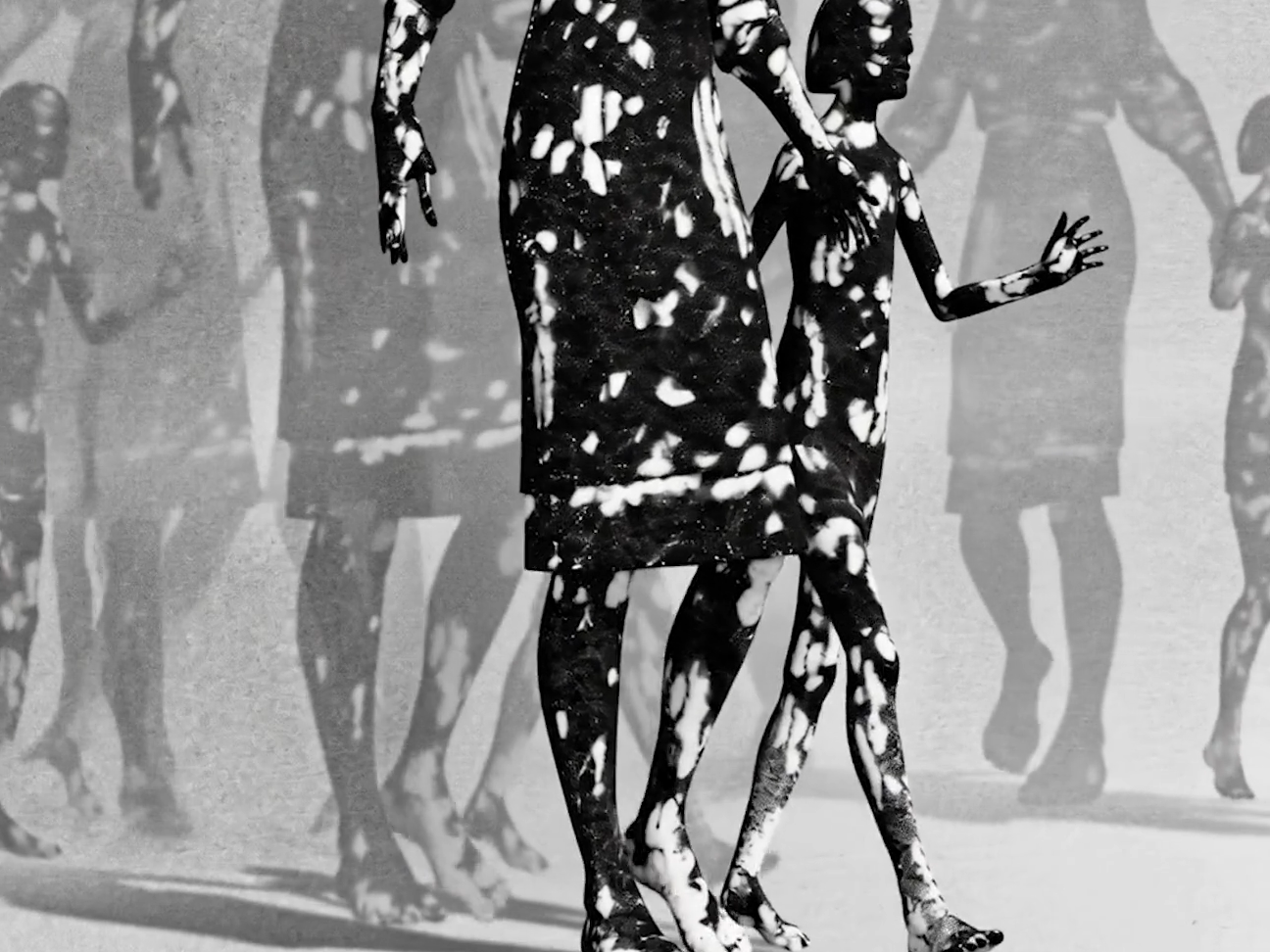
"Pawn Paths" is a black and white story inspired by the Bauhaus style and the game of chess. Through strange dreamy scenes, the film looks at family ties power and pain with people dressed like chess pieces in outfits based on Oskar Schlemmers Triadic Ballet. Each step on a chessboard shows the choices and fights that form human bonds and self across ages. The pawn in life's fights or family issues are also being pushed or run by bigger powers like in a chess match. Theatrical images and music enhance the atmosphere of the piece. The actors sometimes look into the camera to show the audience they are part of the play. I didn't use Act One because I was curious to see how much control I had over image and video generation with text. No consistent characters appear as the story is not about a specific family but about human games and roles in general.
Director Statement
In "Pawn Paths," we examine how families affect our identity in a way that can seem preordained. The metaphor of a chessboard was something that drew me in because it’s a world where each piece has a set place in the world, a set movement, and a set set of unseen parameters by which all decisions are made. In families, we’re often given a set place in the world without even realizing it.
The visual aesthetic for "Pawn Paths" is inspired by Bauhaus architecture and Oskar Schlemmer’s theatrical works. I wanted a world where elegance and confinement went hand in hand: a world where a sense of symmetry, a sense of order, and a sense of silence ruled our everyday lives. And finally, my characters are chess pieces in a way because they’re all just pieces moving about in a world where they didn’t set the parameters for how they must move.
The main character in "Pawn Paths" is a child who witnesses all these intergenerational struggles. Through this character’s lens, we’re able to examine how silence, authority, and distance are all passed on as a means of interacting with others in a family. And yet we’re also shown how even the smallest movement, such as a pawn moving one space on a chessboard, can be the beginning of changing the parameters of a game.
In "Pawn Paths," we’re not interested in conflict through conflict so much as we’re interested in stillness, movement, and relationship in a house that’s a chessboard where all these different characters move around each other in a way that shows us how we all move around each other in a family situation.
Ultimately, "Pawn Paths" asks a very simple question: Do we really have a choice in how we move about in this world or are we set on a chessboard from the very beginning?
Official retailer:
CaisRoom curated web galery